Sample / Demonstration · Fictional
A fictional boater with regular experience on a smaller single-outboard boat is considering a larger twin-outboard cruiser. The result below comes from the DockWise comparison model using illustrative inputs, not a real person's answers or a real boat's measurements.
Example Readiness: Developing. Example Boat Handling: Challenging. These are separate inputs, not a combined safety score.
Operator × Boat compatibility
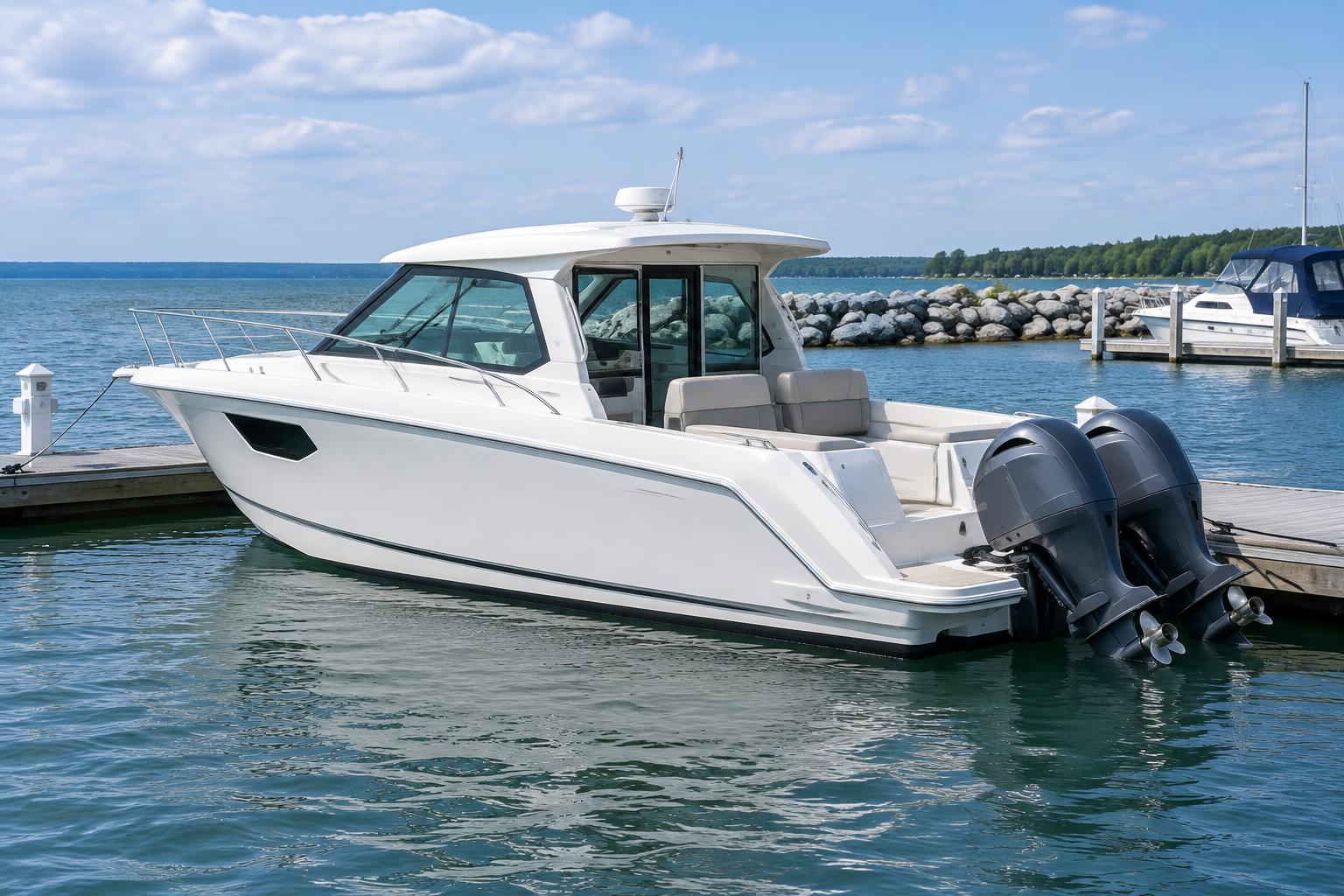
Sample / demonstration · fictionalFictional 32-foot twin-outboard cruiser
Solid Fit
An informational comparison of recorded capability against this boat's handling demands. It is not a qualification, a certification, or permission to operate.
This boat is mostly a good match, with one or two areas that need work.
The main thing is steering and backing: this boat needs more there than your assessment shows. Your assessment does line up well with this boat for handling in wind, maneuvering at slow speed and slowing and stopping. Time on the water in steering and backing is what would change this result most.
Quick takeaways
Your assessment covers what it takes to handle this boat, with less room to spare in its harder areas.
This boat needs considerably more experience steering and backing a boat than your assessment shows, so it is a clear area to build before taking it on alone.
Practise backing in open water to learn how this boat responds in reverse before relying on that response in close quarters.
Where this boat may challenge you
Steering and backing
This boat needs considerably more experience steering and backing a boat than your assessment shows, so it is a clear area to build before taking it on alone.
Good matches
DockWise compared six areas of this boat with the skills and experience recorded in your assessment.
Docking takes more on this boat
Close-quarters work on this boat takes deliberate control, and your slow-speed and docking experience matches what it needs.
Takes room to slow down
This boat carries its momentum, and your experience judging speed and stopping distance is a good match for that.
The wind will be felt
Wind will push this boat around, and your experience reading and working with wind is a good match for that.
Wake and chop
This boat is less demanding in wake and chop, and your experience in changing water conditions matches it well.
Experience on a comparable boat
Your assessment does not cover experience on a comparable boat yet, so nothing was assumed here.
What's new on this boat
Which of this boat's controls you have used before. This is information about the boat, not a rating of boat-handling skills, and it does not affect the fit above.
No added control systems recorded
No added control system beyond this boat's engines and helm is recorded as fitted, so there is nothing of that kind to compare.
Path to a Better Fit
This pairing lines up well overall. A little familiarization on this particular boat is still worth the time, starting with steering and backing.
Focus first
- Steering and backing
- controlled backing exercises
- learning this boat's behavior in reverse
- pivot and turning exercises
- the effects of this boat's propulsion setup
Suggested next step
You may benefit from time on this boat in easy conditions, and from a few sessions of focused practice in the areas above before busier or tighter situations.
This is familiarization guidance only, not a requirement.
Then reassess
After gaining additional experience or instruction, complete a new Operator Readiness assessment and run Compatibility again. DockWise will compare the updated capabilities with the same boat's handling demands. It does not predict what that comparison will say.
What to work on
These come from this comparison only. DockWise does not suggest anything the assessment cannot support.
- 1Practise backing in open water to learn how this boat responds in reverse before relying on that response in close quarters.
- Comparison method used
- operator-boat-compatibility-6
- Readiness method used
- readiness-4/bands-2/e3-ed2-i3-c2-j1
- Boat handling method used
- boat-handling-difficulty-3
- Boat information used
- Illustrative boat inputs
- Operator assessment completed
- —
- Compared on
- —
- Areas compared
- 5 of 6
- Confidence
- Limited
- Compatibility model operator-boat-compatibility-6.
- Operator readiness model readiness-4/bands-2/e3-ed2-i3-c2-j1.
- Boat handling model boat-handling-difficulty-3.
- The handling skills this comparison leans on are self-rated rather than assessed on the water.
- The boat you have the most time operating is not recorded, so the step up to this boat could not be compared.
- This describes the alignment between one operator and one vessel. It is not a certification, a permission to operate, or an insurance judgment.
| Handling demand | Boat demand level | Operator capability level | Alignment |
|---|---|---|---|
| Momentum & Stopping | Challenging | Competent | Comfortable alignment |
| Wind Sensitivity | Challenging | Competent | Comfortable alignment |
| Low-Speed Control | Challenging | Competent | Comfortable alignment |
| Directional & Reverse Control | Challenging | Developing | Well short of what this boat asks |
| Control Systems | Challenging | Not recorded | Not compared |
| Water & Hull Sensitivity | Manageable | Competent | Comfortable alignment |
| Experience on a comparable boat | Not compared | Not recorded | Not compared |
Full technical wording of this result
The most consequential part of this pairing is directional & reverse control: this boat places challenging handling demand here, and your recorded capability reads developing. Your record does line up with what this boat asks in wind sensitivity, low-speed control and momentum & stopping. Closing that leading demand would change this answer more than anything else. The boat you have the most time operating has not been recorded yet, so this step cannot be compared.
- Directional & Reverse Control: this boat places challenging handling demand here against developing recorded capability.
- Momentum & Stopping: this boat places challenging handling demand here, and your recorded capability reads competent.
- Wind Sensitivity: this boat places challenging handling demand here, and your recorded capability reads competent.
- Low-Speed Control: this boat places challenging handling demand here, and your recorded capability reads competent.
- Water & Hull Sensitivity: this boat places manageable handling demand here, and your recorded capability reads competent.
- Anticipating momentum · primary75
- Neutral and power control · primary75
- Instruction covering this demand · secondarynot assessed
- Previous vessel experience · secondary
- Reading wind and current · primary75
- Holding to wind and weather limits · primary100
- Instruction covering this demand · secondarynot assessed
- Operating environments · secondary50
- Approach execution · primary75
- Aborting and repositioning · primary75
- Neutral and power control · primary75
- Instruction covering this demand · secondarynot assessed
- Recent operating frequency · secondary
- Backing this drive type · primary40
- Experience with this drive type · secondary · familiaritynot recorded
- Experience with this boat's control systems · secondary · familiaritynot recorded
This depends on facts about the selected boat that have not been established yet.
- Experience with this boat's control systems · primary · familiaritynot recorded
- Experience with this drive type · primary · familiaritynot recorded
- Instruction on a comparable configuration · secondary · familiaritynot recorded
- Reading wind and current · primary75
- Operating environments · secondary50
- Active years · secondary
This assessment is decision support, not certification of an operator or a determination that a vessel is safe or unsafe to operate.
This describes how one boat's handling demands compare with the capabilities recorded in an Operator Readiness assessment. It is not a statement about today's conditions, a berth, or a guarantee that docking will be easy.
One-page summary
Solid Fit
Fictional boater · Fictional 32-foot twin-outboard cruiser
The most consequential part of this pairing is directional & reverse control: this boat places challenging handling demand here, and your recorded capability reads developing. Your record does line up with what this boat asks in wind sensitivity, low-speed control and momentum & stopping. Closing that leading demand would change this answer more than anything else. The boat you have the most time operating has not been recorded yet, so this step cannot be compared.
An informational comparison of recorded capability against this boat's handling demands. It is not a qualification, a certification, or permission to operate.
Strongest matches
- Momentum & Stopping: this boat places challenging handling demand here, and your recorded capability reads competent.
- Wind Sensitivity: this boat places challenging handling demand here, and your recorded capability reads competent.
- Low-Speed Control: this boat places challenging handling demand here, and your recorded capability reads competent.
Areas to build
- Directional & Reverse Control: this boat places challenging handling demand here against developing recorded capability.
What's new on this boat
No added control systems recorded
No added control system beyond this boat's engines and helm is recorded as fitted, so there is nothing of that kind to compare.
Practical next step
Practise backing in open water to learn how this boat responds in reverse before relying on that response in close quarters.
- Plan a docking day for this boat: this boat carries its way and reacts to wind, so conditions matter on the day
- Compare docks for this boat: approach room and shelter change how much of that demand you feel
- Boating instruction and resources: there is a recorded capability area worth building before handover
Not compared yet
- Control Systems: does not apply to this boat
- Experience on a comparable boat: not recorded on the operator's side yet, so it was not compared
Confidence: Limited
This is a public, fictional demonstration. A personal Compatibility report belongs to its buyer and is not shared with a dealership unless the buyer chooses to share it.
How to read this example
DockWise compares the recorded capabilities in an Operator Readiness assessment with the boat's separate handling demands. Confidence reflects the quality and completeness of the evidence, not the boater's ability. Here the example is based on self-reported skills and illustrative boat inputs. This is decision support, not a certification, insurance approval or a statement about conditions at a particular dock.
Your first step
See what your own experience brings to the helm.
Operator Readiness is free and is the first step toward a personal comparison with a specific boat. A dealer with active DockWise access may include the comparison on its inventory; otherwise individual purchase availability depends on checkout setup.